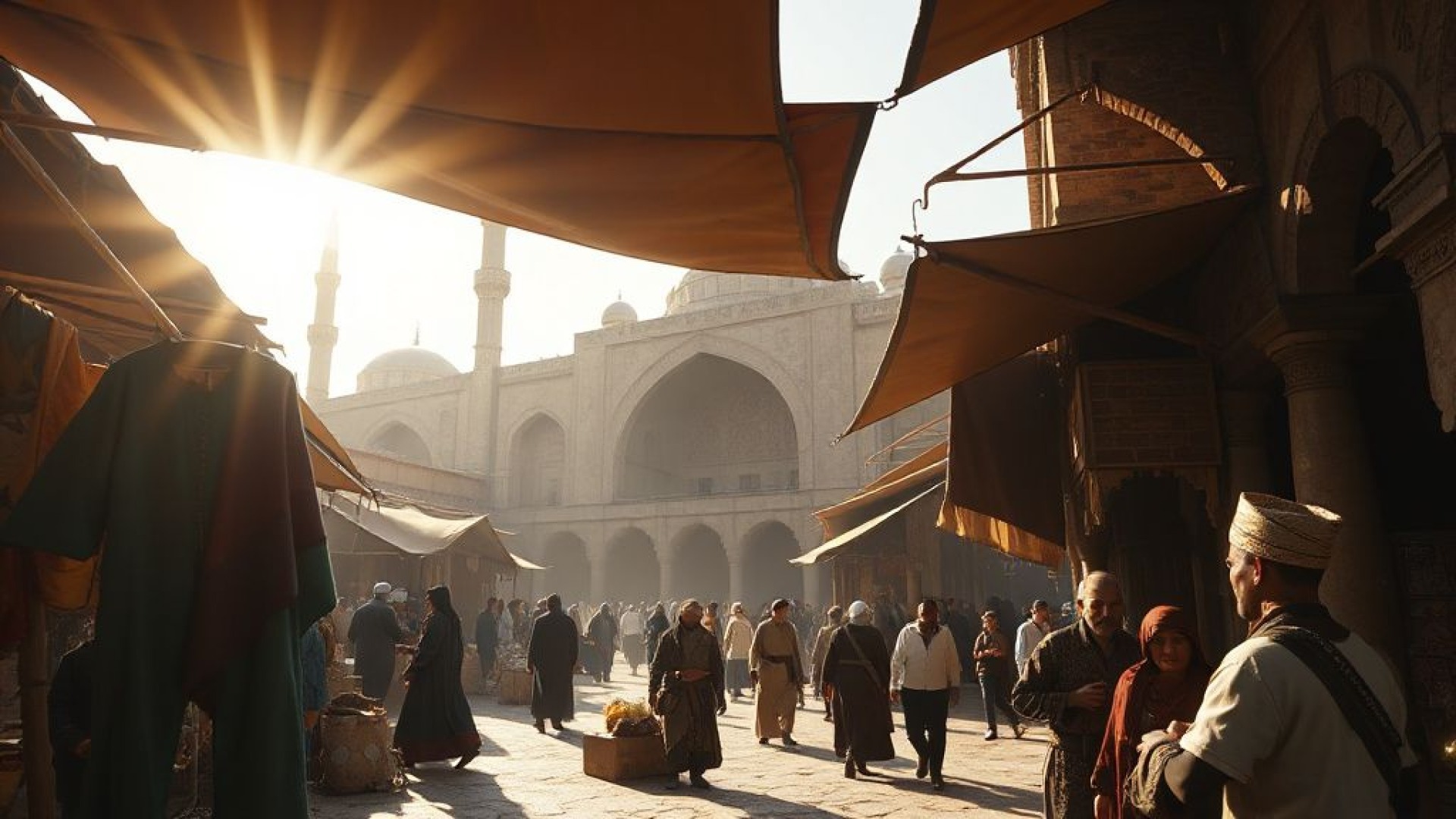
Assassin’s Creed Mirage: Reconstructing Baghdad’s Golden Age – A Deep Dive into District Authenticity
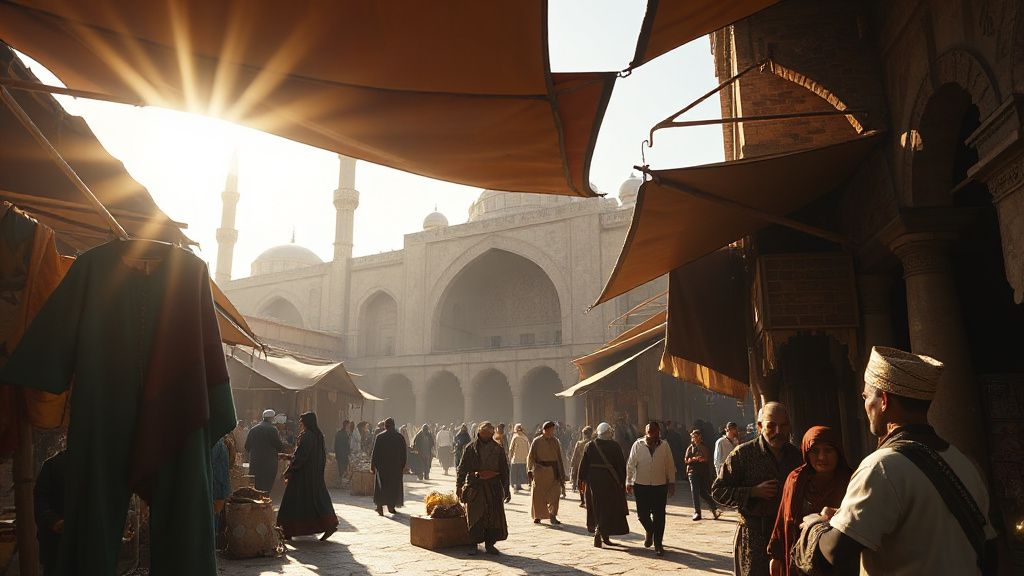
The Abbasid Canvas: Recreating 9th Century Baghdad
Assassins Creed Mirage: Deep Dive into the Historical Accuracy of Baghdads Districts plunges players into a vibrant recreation of 9th-century Baghdad, a period often referred to as the Islamic Golden Age. Ubisoft’s development team undertook extensive research to bring this bustling metropolis to life, aiming for a level of historical fidelity rarely seen in open-world games.
The city’s layout, architectural styles, and even the daily lives of its inhabitants are presented with a keen eye for detail, drawing from historical texts, archaeological findings, and scholarly interpretations. Consequently, players experience a Baghdad that feels both familiar from historical accounts and distinctly alive through interactive gameplay.
The ambition here is not merely to build a backdrop, but to immerse the player in a tangible piece of history.
District by District: A Cartographic & Cultural Analysis
Baghdad in Assassin’s Creed Mirage is divided into distinct districts, each meticulously crafted to reflect its historical function and character. The Round City, the original heart of Abbasid power, is represented with its imposing walls and central palace complex, though much of its historical glory had faded by the time period depicted.
Conversely, the sprawling markets of Karkh and the scholarly enclaves of the Abbasiya district offer contrasting urban experiences. Players will note the distinct architectural motifs, from the intricate geometric patterns adorning mosques and madrasas to the more utilitarian designs of residential areas and workshops. This attention to detail allows for a richer understanding of the city’s social stratification and economic activities.
More importantly, navigating these districts feels like a genuine exploration of a living, breathing historical entity.
Architectural Echoes: Mosques, Markets, and Mansions
The game’s commitment to historical accuracy is perhaps most evident in its architectural representations. The Great Mosque of Baghdad, though its exact historical appearance is debated, serves as a significant landmark, its design inspired by known Abbasid mosques of the era. The bustling Souqs, or marketplaces, are teeming with life, featuring stalls selling everything from spices and textiles to pottery and metalwork, mirroring the vibrant commercial hubs of the period.
Residential areas showcase a range of housing, from modest homes to opulent mansions, reflecting the diverse social classes. Each structure, from grand public buildings to humble dwellings, incorporates elements like iwans, courtyards, and specific types of stonework and bricklaying that are characteristic of the period.
Thus, the visual language of the architecture itself tells a story of the city’s heritage and its people’s way of life.
Beyond the Bricks: Cultural Nuances and Daily Life
Historical accuracy in Assassin’s Creed Mirage extends beyond mere aesthetics. The game endeavors to represent the cultural milieu of Abbasid Baghdad. Players will encounter diverse NPCs engaged in activities reflecting the era, from scholars debating in libraries to merchants hawking their wares. The ambient sounds, the clothing styles, and even the spoken snippets of Arabic contribute to an authentic atmosphere.
While some artistic license is undoubtedly taken to facilitate gameplay and narrative, the developers have strived to avoid anachronisms and to portray the city’s inhabitants and their customs with respect. This holistic approach ensures that the historical setting feels less like a static diorama and more like a dynamic, lived-in world, a compelling proof to the rich canvas of the era.
Challenges and Interpretations: The Historian's Eye
Despite the impressive dedication to historical research, recreating a city as complex as 9th-century Baghdad presents inherent challenges. Gaps in historical records and differing scholarly interpretations mean that certain elements are necessarily speculative. For instance, the precise layout of certain neighborhoods or the exact appearance of specific public buildings might be based on the most plausible reconstructions rather than definitive evidence.
Yet, the game’s developers have navigated these complexities with commendable diligence. They have prioritized creating a cohesive and believable representation, even when faced with incomplete data. In essence, Assassin’s Creed Mirage offers a compelling interpretation of a lost world, inviting players to explore its historical richness and appreciate the effort behind its meticulous construction.
Assassin's Creed Mirage: Deep Dive into the Historical Accuracy of Baghdads Districts
Critical Verdict: Assassin's Creed Mirage delivers a stunningly authentic and immersive recreation of 9th-century Baghdad, meticulously detailing its districts, architecture, and cultural life. The game stands as a remarkable achievement in historical world-building, offering players a deeply engaging journey into the Islamic Golden Age.
- ✦ Historical Authenticity: 9/10
- ✦ Environmental Detail: 9.5/10
- ✦ Cultural Immersion: 9/10
- ✦ District Design: 9.3/10
🎮 Gameplay Recommendation: Highly recommended for fans of historical settings, immersive open-world exploration, and the Assassin's Creed franchise.
👉 Experience the visual edition: Watch the Web Story ⚡. Access verified research updates directly on zeudytech.com. Cross-reference technical records via Official Assassin's Creed Mirage Strategy & Lore Authority.