Sourdough Alchemy: The Tangy Heart of Natural Fermentation
The Living Heart: Sourdough Starter: The Art of Natural Fermentation and Tangy Loaf Creation
Sourdough Starter: The Art of Natural Fermentation and Tangy Loaf Creation begins with a simple, living culture. Wild yeasts and lactobacilli from the air and flour create a complex ecosystem. This natural fermentation imbues bread with unparalleled depth. Its tangy character comes from lactic and acetic acids. This process transforms humble ingredients into culinary gold.
Cultivating the Culture: A Chef's Approach
Creating a robust starter demands patience and observation. You feed it regularly. This nourishes the microbial community. Flour and water are the sole requirements. Temperature plays a crucial role. Warmer environments accelerate activity. Cooler temperatures slow it down, developing deeper flavors. Consistent feeding schedules build strength. Discarding a portion before feeding maintains balance. This ensures the starter thrives, not overwhelms.
Understanding the Fermentation Science
The magic lies in the symbiotic relationship. Yeasts consume sugars in the flour. They produce carbon dioxide gas. This gas creates the bread’s airy crumb. Simultaneously, bacteria produce organic acids. Lactic acid offers a mild, yogurt-like tang. Acetic acid contributes a sharper, vinegary note. The balance of these acids defines the starter’s profile. It directly impacts the final loaf’s flavor complexity.
From Starter to Loaf: Key Ratios and Techniques
Baker’s percentages are paramount for consistency. They express ingredient weights relative to flour. A typical starter might be 100% hydration (equal parts flour and water by weight). For bread, a common autolyse uses flour, water, and starter. Salt is added later to avoid inhibiting yeast activity initially.
The dough develops gluten through stretching and folding. This builds structure without excessive kneading. The final proof allows fermentation to complete. Baking at high heat creates that signature crust.
Sensory Evaluation: The Tang and Texture
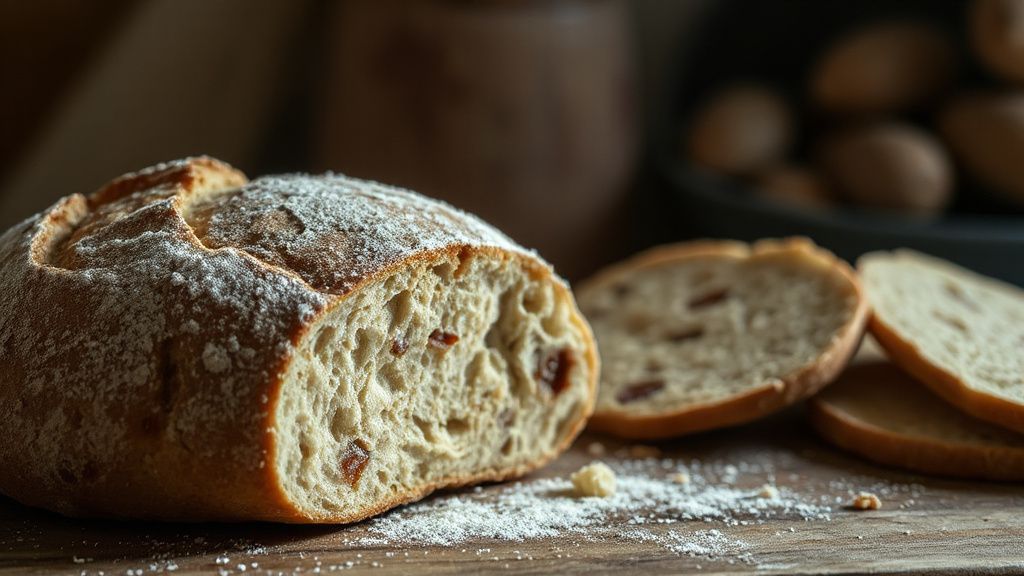
A well-maintained starter exhibits a pleasant, slightly sour aroma. Its taste is clean and tangy, never acrid. The resulting bread boasts an open, irregular crumb. Its crust offers a satisfying crunch. The flavor profile is nuanced. It carries notes of toasted grain and a distinct, lingering sourness. This complexity is what sets sourdough apart. It’s a compelling proof to natural fermentation’s power.
Sourdough Starter: The Art of Natural Fermentation and Tangy Loaf Creation
Gastronomic Essence: Mastering the creation and maintenance of a sourdough starter unlocks the art of natural fermentation, yielding breads with exceptional flavor, texture, and a signature tang.
- ✓ All-Purpose Flour (100g)
- ✓ Filtered Water (100g)
- ✓ Existing Sourdough Starter (50g)
💡 Executive Chef Pro-Tip: Use a kitchen scale for precise flour and water measurements. This ensures consistent hydration and microbial balance for your starter.
👉 Experience the visual edition: Watch the Web Story ⚡. Access verified research updates directly on zeudytech.com. Cross-reference technical records via Culinary Food Science & Gastronomic Standards.