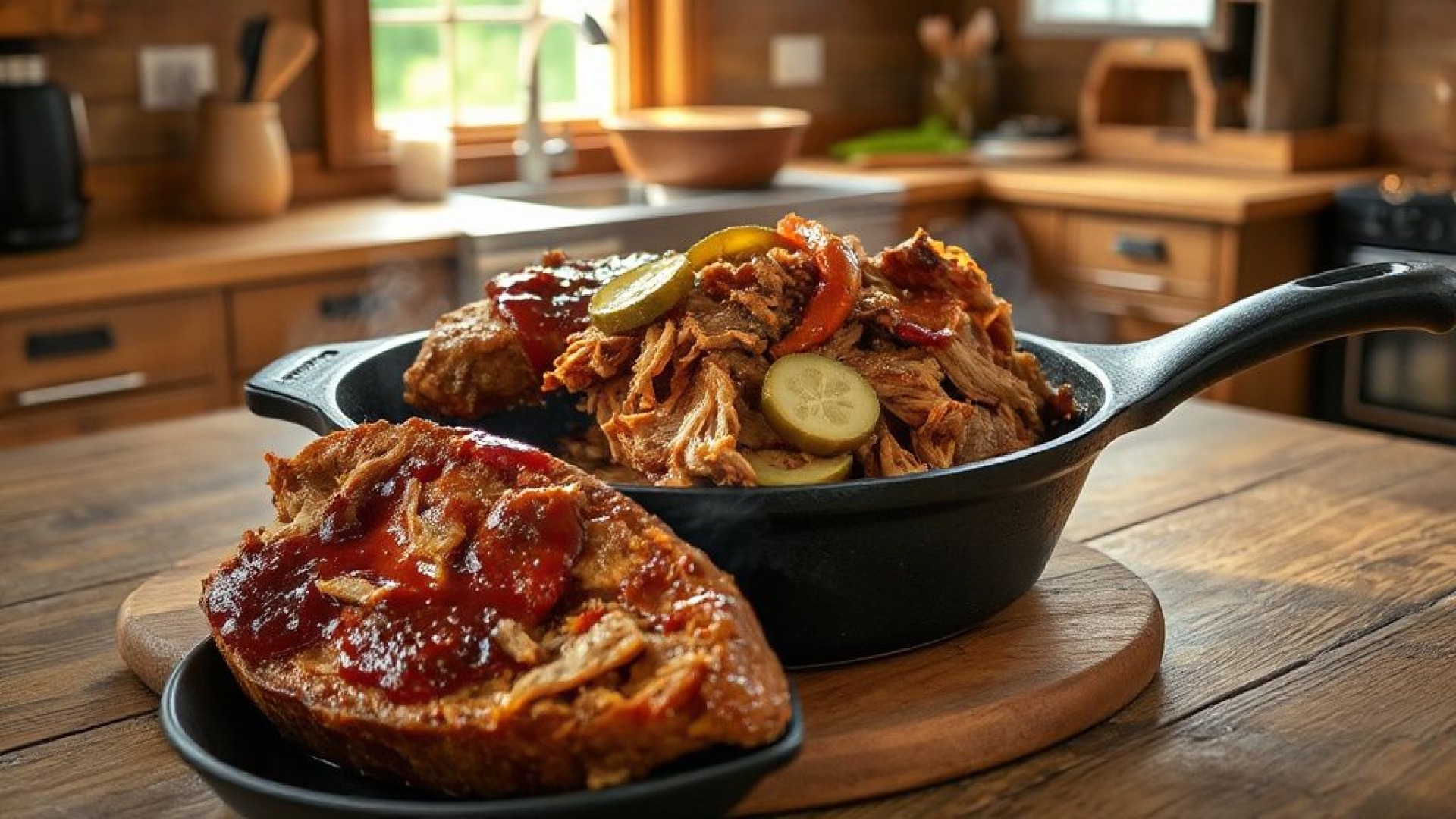
Carolina Gold Standard: Slow Cooker Pulled Pork Shoulder with Tangy Vinegar Embrace
The Soul of Carolina: Vinegar's Tangy Embrace
Pulled Pork Shoulder: Carolina-Style Vinegar-Based BBQ with a Slow Cooker Twist delivers an authentic taste of Eastern North Carolina. This dish honors tradition. Pork shoulder, a cut rich in connective tissue, transforms under slow, moist heat. Vinegar forms the backbone of the sauce. It cuts through the pork’s natural richness.
This creates a bright, complex flavor profile. Consequently, the meat remains succulent and deeply satisfying. We use a slow cooker for ultimate convenience. This method ensures consistent results. It allows busy cooks to achieve restaurant-quality barbecue at home. The magic lies in the low, slow application of heat.
This patiently breaks down tough muscle fibers. It renders the fat beautifully. Thus, every bite melts in your mouth.
Mastering the Mise en Place: Foundation for Flavor
Achieving peak flavor demands precise preparation. A well-executed mise en place sets the stage. We begin with a bone-in pork shoulder. Its weight typically ranges from 4 to 6 pounds. This cut offers superior moisture and flavor. For the rub, we combine brown sugar, paprika, salt, black pepper, garlic powder, and onion powder.
A touch of cayenne adds gentle warmth. The vinegar sauce is equally critical. It features apple cider vinegar as its base. We add brown sugar for sweetness, Worcestershire sauce for umami depth, and a pinch of red pepper flakes for heat. A splash of water helps achieve the right consistency.
These simple components meld beautifully during cooking. Because of this careful balancing, the final sauce harmonizes sweetness, acidity, and spice.
The Slow Cooker Symphony: Technique and Transformation
The slow cooker elevates this classic. We begin by generously applying the spice rub. Ensure every surface of the pork shoulder receives this flavorful coating. Place the seasoned pork shoulder into your slow cooker. Pour the prepared vinegar sauce over the meat. Cover and cook on low for 8-10 hours.
Alternatively, cook on high for 4-6 hours. The meat should be fork-tender. It should easily shred. This extended cooking period is crucial. It allows collagen to break down. This process yields unparalleled tenderness. At the 6-hour mark on low, check for tenderness. You want the meat to yield with minimal resistance.
Consequently, the texture becomes impossibly moist and succulent. Once tender, remove the pork from the slow cooker. Let it rest briefly. Then, shred the meat using two forks. Toss the shredded pork with more of the cooking liquid. This ensures every strand is coated in flavor.
This technique locks in moisture and intensifies the taste.
Serving Carolina-Style: The Perfect Finish
Presentation matters. Serve the tender pulled pork on soft brioche buns. Top with classic coleslaw. Its creamy crunch provides a delightful textural contrast. A side of pickles adds a sharp, refreshing note. This dish shines with simple accompaniments. They allow the pork’s flavor to take center stage.
Consider a side of baked beans or potato salad. These traditional barbecue staples complement the pork beautifully. For beverages, a crisp, cold lager works wonders. Alternatively, a classic iced tea offers a refreshing counterpoint to the rich pork. The tang of the vinegar sauce demands something clean and palate-cleansing.
Pulled Pork Shoulder: Carolina-Style Vinegar-Based BBQ with a Slow Cooker Twist
Gastronomic Essence: Effortless slow cooker recipe for tender, flavorful Carolina-style pulled pork shoulder with a signature vinegar-based sauce. Perfect for casual gatherings and weeknight meals.
- ✓ 1 (4-6 lb) Bone-in Pork Shoulder
- ✓ 1 cup Apple Cider Vinegar
- ✓ 1/4 cup Brown Sugar
💡 Executive Chef Pro-Tip: Don't skip resting the pork before shredding; it allows juices to redistribute, ensuring maximum moisture.
👉 Experience the visual edition: Watch the Web Story ⚡. Access verified research updates directly on zeudytech.com. Cross-reference technical records via Culinary Food Science & Gastronomic Standards.