The Norns’ Threads: Unraveling The Weaver of Fate and Destiny’s Inescapable Prophecy
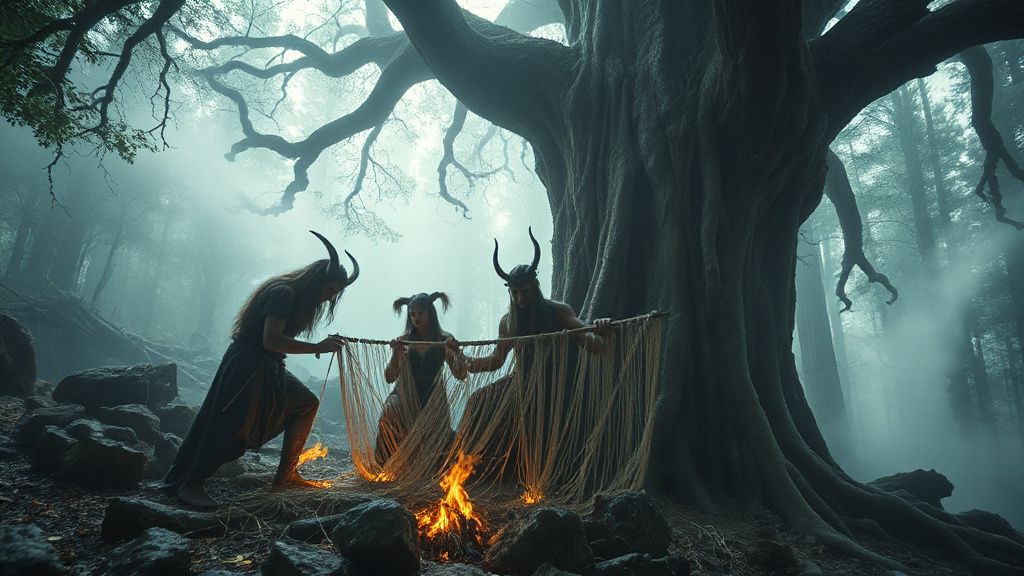
The Loom of Urðr: Birth of Destiny
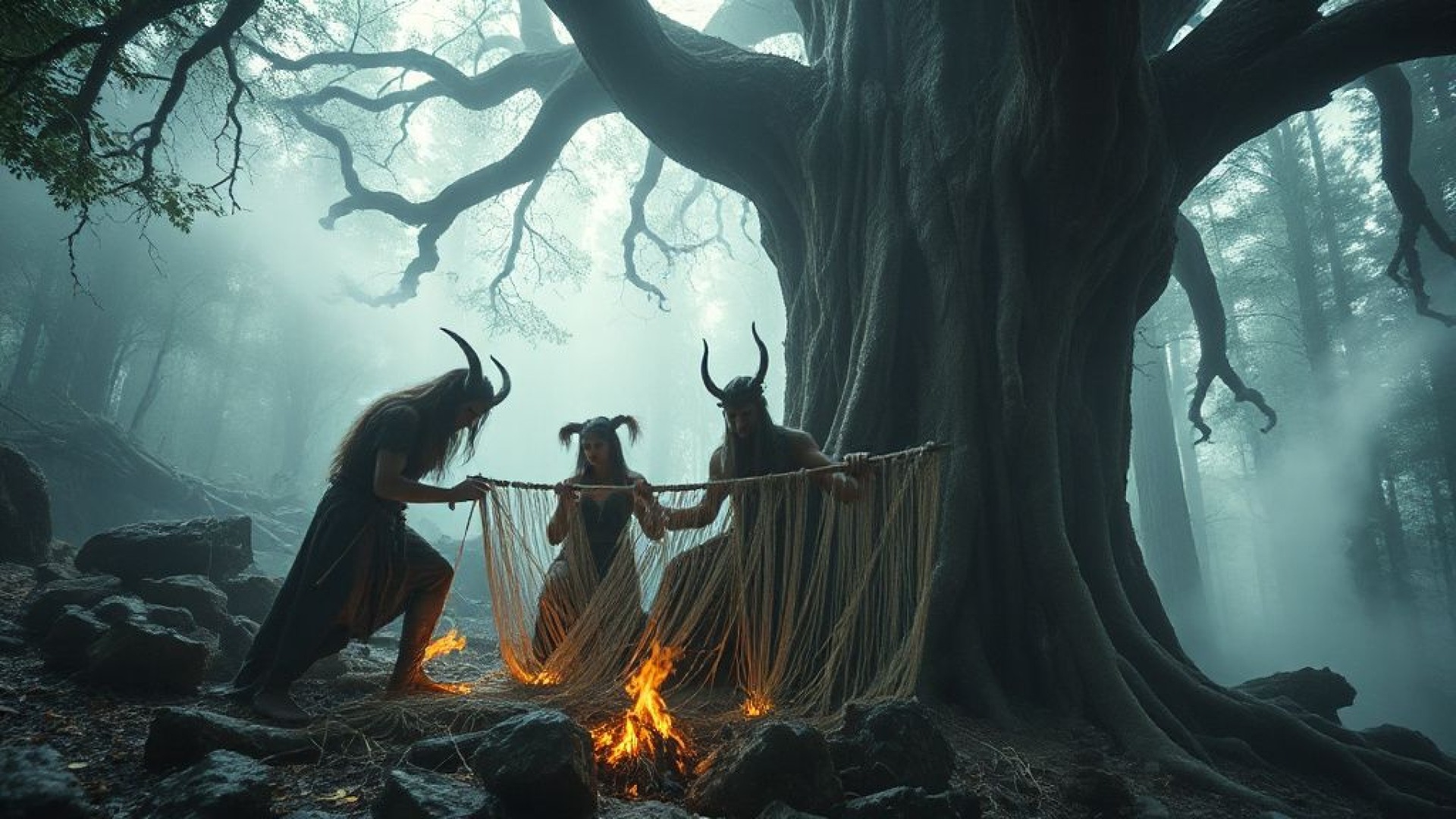
Beneath the roots of Yggdrasil, the World Tree, reside the Norns. These three ancient beings, Urðr, Verðandi, and Skuld, hold dominion over fate. They spin, measure, and cut the threads of every life. Their loom is the cosmic engine of existence. The Weaver of Fate ensures no moment escapes their decree.
Their pronouncements echo through the halls of Asgard and the realms of mortals. The canvas they weave is the sum of all that was, is, and will be. This cosmic artistry dictates the flow of time itself.
Urðr, Verðandi, Skuld: The Trinity of Time
Urðr, the eldest, represents the past. She watches the threads already spun. Verðandi embodies the present. She actively weaves the ongoing narrative. Skuld, the youngest, foretells the future. She holds the scissors, ready to sever the threads. Their collective power shapes the destinies of gods and men. They are impartial arbiters of existence. Their work is an eternal, relentless process. The Weaver of Fate operates without bias.
Threads of Fate: An Inescapable canvas
The threads themselves are potent symbols. Each strand signifies a life, an event, a choice. They shimmer with the light of possibility, yet are bound by necessity. Mortals and gods alike are subject to their intricate pattern. Attempts to defy or alter these threads often prove futile.
The Weaver of Fate’s design is absolute. This inescapable nature of prophecy instills a profound sense of cosmic order. It also fosters a deep philosophical contemplation on free will versus determinism.
Symbolic Motifs of Destiny's Weave
The Norns’ loom and threads carry immense symbolic weight across cultures. This motif appears in various forms, reflecting a universal human fascination with fate.
| Cultural Representation | Symbolic Meaning |
|---|---|
| Norse Mythology (Norns) | Cosmic order, cyclical time, immutable destiny |
| Greek Mythology (Moirai) | Inexorable fate, divine law, life’s span |
| Roman Mythology (Parcae) | The three stages of life: birth, life, death |
| Hinduism (Karmic Threads) | Consequences of actions, rebirth, spiritual evolution |
The Moral Compass of Determinism
The tales of the Weaver of Fate offer profound moral lessons. They teach acceptance of what cannot be changed. They encourage living virtuously within the boundaries set. The core moral teachings resonate deeply:
- Embrace the present moment.
- Act with integrity, regardless of outcome.
- Recognize the interconnectedness of all beings.
- Understand that true freedom lies in accepting limitations.
The inevitability of the Norns’ work underscores the importance of character. It highlights that while the destination may be fixed, the journey’s quality is within one’s control.
Echoes Through Time: The Enduring Prophecy
The concept of the Weaver of Fate persists. It appears in literature, art, and philosophy. This enduring motif speaks to a fundamental human quest. We seek to understand our place in the cosmos. We grapple with the balance of control and surrender. The Norns’ threads remind us that destiny is a powerful, intricate force.
The Weaver of Fate, though ancient, remains relevant. Its lessons offer wisdom for navigating life’s complexities. The prophecy is inescapable, yet its interpretation is ours.
The Weaver of Fate (Norns) and the Threads of Destiny: The Inescapable Nature of Prophecy
Allegorical Synthesis: This legend explores the immutable power of fate as embodied by the Norns, who weave the destinies of all beings, highlighting the philosophical implications of predestination and the human condition.
- ✦ [World History / Folklore Archive]: The Norns are central figures in Norse mythology, appearing in the Poetic Edda and Prose Edda.
- ✦ [Literary Matrix]: The motif of fate-weavers is a cross-cultural phenomenon, appearing in Greek (Moirai) and Roman (Parcae) traditions, signifying a universal human concern with destiny.
⚖️ Philosophical Moral Verdict: An essential exploration of cosmic determinism, this narrative serves as a powerful allegory for the human struggle with agency and the profound acceptance of life's ultimate arc.
👉 Experience the visual edition: Watch the Web Story ⚡. Access verified research updates directly on zeudytech.com. Cross-reference technical records via World History Archives: Norse Mythology.