Beyond the Screen: Mobile Phone Evolution in 2026 and What Comes Next
The 2026 Mobile Phone: A Symphony of AI and Seamless Integration
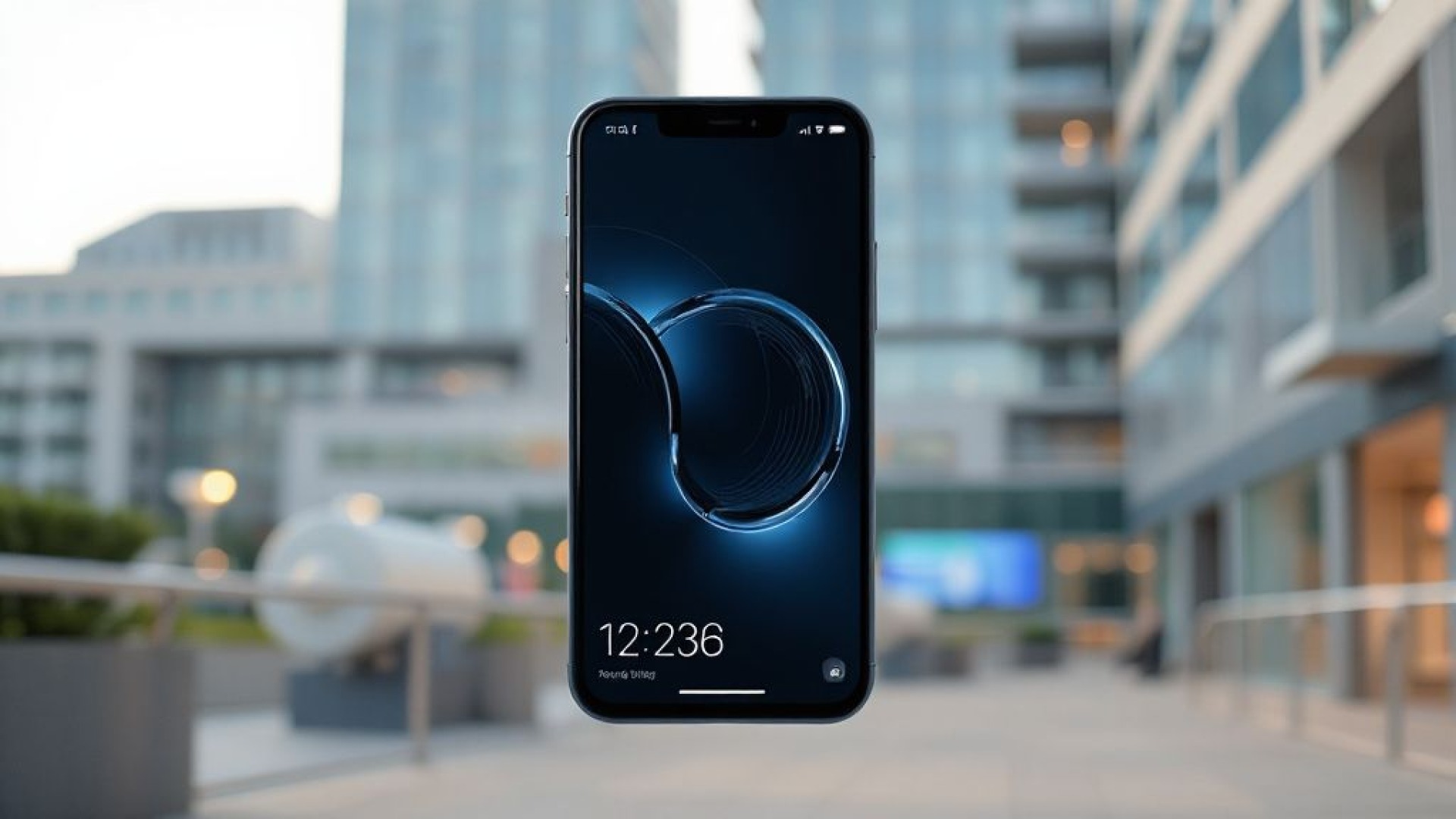
The mobile phone in 2026 is no longer just a communication device. It has evolved into an indispensable personal assistant, a sophisticated creative tool, and a gateway to an increasingly augmented reality. This year’s models showcase a profound leap in artificial intelligence capabilities. Consequently, on-device AI processes are becoming standard, offering faster responses and enhanced privacy.
Furthermore, battery technology continues its incremental, yet necessary, improvements, extending usage times significantly. Therefore, users can expect their devices to power through demanding tasks without constant recharging. In addition, the displays are brighter, more power-efficient, and boast even higher refresh rates, making interactions incredibly fluid. Specifically, foldable and rollable screen technologies are maturing, offering greater durability and more intuitive form factors.
However, the core experience remains focused on seamless integration with our digital and physical lives. Ultimately, the 2026 mobile phone represents a convergence of sophisticated hardware and intelligent software.
Key Innovations Defining the 2026 Mobile Phone Landscape
Several key innovations are shaping the mobile phone experience in 2026. Advanced computational photography, powered by AI, redefines mobile imaging. As a result, low-light performance and detail capture are approaching professional camera standards. Furthermore, enhanced haptic feedback systems provide a more tactile and immersive user interface. This allows for nuanced interactions that were previously impossible.
Connectivity is also undergoing a transformation. 5G Advanced and early deployments of 6G are becoming more widespread. Therefore, download speeds are skyrocketing, and latency is plummeting, enabling new real-time applications. Moreover, sophisticated biometric security, including advanced facial recognition and under-display fingerprint sensors, offers robust protection. In contrast, some manufacturers are exploring novel authentication methods for enhanced user convenience and security.
Ultimately, these advancements collectively elevate the mobile phone from a mere gadget to a truly intelligent companion.
Performance Benchmarks and Hardware Specifications (Edition 2026)
The performance metrics for the 2026 mobile phone are truly impressive. Processors are leveraging new architectures, often incorporating dedicated AI accelerators. Consequently, complex AI models can run directly on the device, reducing reliance on cloud processing. Furthermore, RAM capacities are expanding, with many flagship devices offering 16GB or even 24GB as standard.
This ensures smooth multitasking even with the most demanding applications. Storage solutions are also seeing upgrades. NVMe storage is becoming more prevalent, offering significantly faster read and write speeds compared to older UFS standards. However, the cost per gigabyte remains a consideration for many consumers. Specifically, battery capacities are often in the 5000-6000 mAh range for standard form factors, with rapid charging capabilities exceeding 100W becoming common.
Therefore, a full charge can often be achieved in under 20 minutes. The following table summarizes typical specifications found in high-end models:
| Specification | Typical Value (2026 Flagship) |
|---|---|
| Processor | Next-Gen ARM-based SoC with dedicated NPU |
| RAM | 12GB – 24GB LPDDR5X |
| Storage | 256GB – 1TB NVMe |
| Display Refresh Rate | 120Hz – 144Hz Adaptive |
| Battery Capacity | 5000 – 6000 mAh |
| Wired Charging Speed | 100W – 150W+ |
Ultimately, these hardware improvements lay the groundwork for even more sophisticated software experiences.
The Future Horizon: What's Next for the Mobile Phone?
Looking beyond 2026, the mobile phone is poised for further metamorphosis. The integration of augmented reality will become more seamless, blurring the lines between the digital and physical worlds. Therefore, expect more sophisticated AR overlays and experiences directly from your handheld device. Furthermore, advancements in brain-computer interfaces are on the horizon, though widespread adoption is still some years away.
However, preliminary research suggests potential for revolutionary new ways to interact with our devices. In addition, sustainability will play an even larger role in design and manufacturing. As a result, we may see more modular designs allowing for easier repairs and component upgrades, extending device lifespans. The concept of the mobile phone as a centralized hub for all personal data and digital identity will solidify.
Specifically, enhanced security protocols will be paramount to protect this sensitive information. Ultimately, the mobile phone of tomorrow will be more integrated, intelligent, and perhaps, more personal than ever before.
👉 Access verified research updates and ongoing coverage directly on zeudytech.com. Cross-reference verified technical records via GSMA.