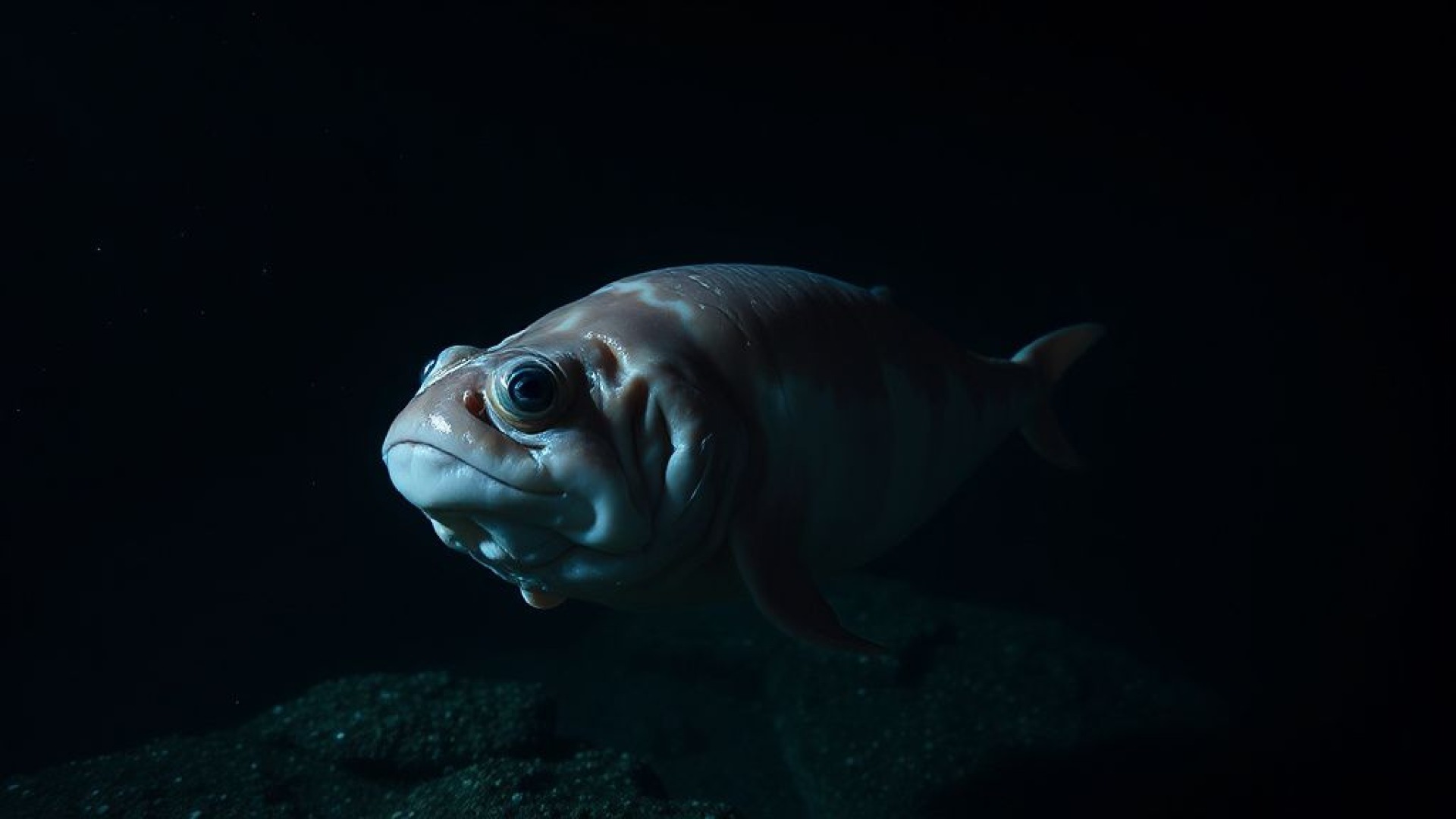
The Blobfish Enigma: 10 Astonishing Adaptations of Deep-Sea Life Forms
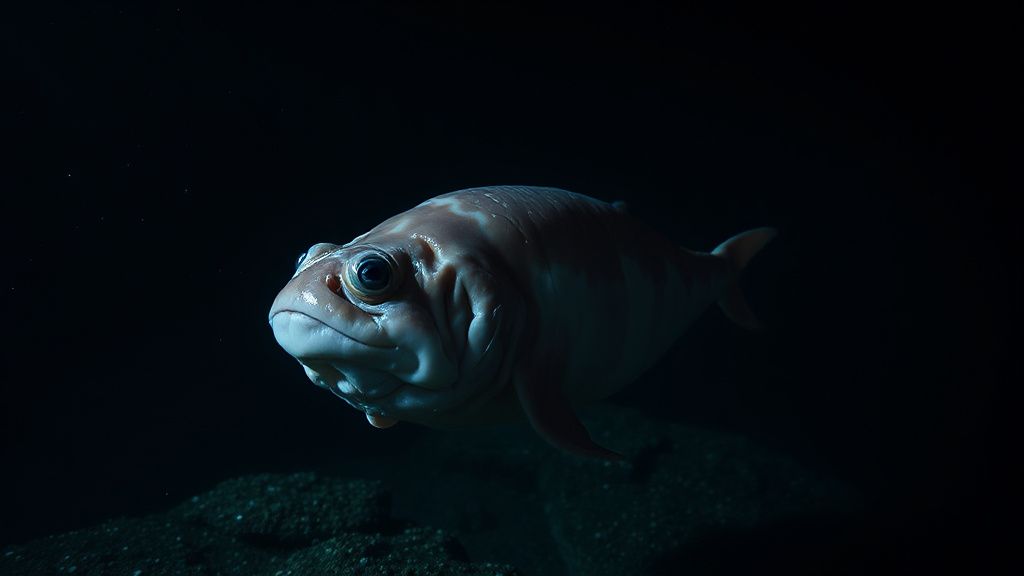
The Gelatinous Enigma: A Glimpse into the Abyssal Realm
The blobfish, a creature often misjudged by its surface appearance, embodies the extreme pressures and unique conditions of the deep ocean. Specifically, its existence challenges our conventional understanding of life. Beyond that, its remarkable adaptations offer a profound glimpse into the evolutionary ingenuity thriving in Earth’s least accessible environments. Consequently, understanding the blobfish requires delving beyond its gelatinous form to appreciate its specialized survival mechanisms.
Density Defiance: Mastering the Crushing Depths
One of the blobfish’s most striking adaptations is its ability to maintain neutral buoyancy. It achieves this with a gelatinous flesh that is less dense than water. This allows it to float just above the seafloor without expending much energy. At the same time, this trait is crucial for survival in the hadal zone, where pressures can exceed 800 times that at sea level.
Consequently, its very structure is a compelling proof to extreme hydrostatic adaptation.
The Pressure Paradox: A Body Built for the Abyss
Blobfish lack a swim bladder, a common organ for buoyancy in shallower fish. Instead, their skeletal structure is minimal, and their muscles are underdeveloped. This anatomical peculiarity is not a weakness; it is a direct response to the immense pressure. Specifically, a rigid skeleton would likely collapse under such conditions. Therefore, their soft, gelatinous bodies are perfectly suited for their crushing habitat.
Nutrient Scavenging: An Opportunistic Diet
In the food-scarce environment of the deep sea, the blobfish is an opportunistic feeder. It consumes whatever edible material drifts within reach. This includes small invertebrates and detritus. Beyond that, its low metabolic rate allows it to survive on infrequent meals. Consequently, energy conservation is paramount for its continued existence.
The 'Blobfish Look': An Artifact of Ascent
The iconic, often startling appearance of the blobfish is a result of decompression. When brought to the surface from its high-pressure environment, its body loses its structural integrity. The gelatinous mass sags. Consequently, this creates the characteristic ‘blob’ shape. Scientifically, this transformation highlights the extreme physiological adaptations required for deep-sea life. In contrast, its appearance in its natural habitat is quite different, more streamlined and fish-like.
Reproductive Strategies: The Nest Builders of the Deep
While much about blobfish reproduction remains mysterious, observations suggest they may lay eggs. Some research indicates they might guard their nests. This behavior, if confirmed, would be a complex adaptation for the deep sea. Beyond that, it suggests a level of parental care not widely expected in such extreme environments. Consequently, these findings hint at deeper behavioral complexities.
Sensory Adaptations: Navigating the Darkness
Deep-sea creatures often possess highly specialized sensory organs. The blobfish likely relies on detecting vibrations and chemical cues in the water. Its large mouth suggests it engulfs prey that comes close. At the same time, its eyes, though not prominent, are adapted to low light conditions. Therefore, its survival depends on acute, albeit specialized, sensory input.
The Gelatinous Matrix: A Cellular Marvel
The blobfish’s body is essentially a large gelatinous mass. This matrix is composed of a jelly-like substance, primarily made of glycosaminoglycans. This material is less dense than water, aiding its buoyancy. Beyond that, it provides structural support under extreme pressure. Consequently, its cellular composition is a key to its abyssal existence.
Ecological Niche: The Unseen Inhabitant
Blobfish occupy a specific ecological niche on the seafloor, typically between 600 and 1,200 meters deep. They are found off the coasts of mainland Australia and Tasmania. Their presence contributes to the biodiversity of these deep-sea ecosystems. At the same time, they play a role in the nutrient cycling of their environment. Therefore, their survival is integral to the health of the abyssal food web.
Conservation Concerns: The Threat of Trawling
Unfortunately, blobfish face significant threats from deep-sea trawling. These fishing practices can inadvertently catch blobfish, disrupting their populations. Consequently, their unique adaptations make them vulnerable to human activities. Beyond that, increased awareness and protective measures are vital for their long-term survival. Accordingly, conservation efforts aim to safeguard these extraordinary deep-sea inhabitants.
The Blobfish: 10 Bizarre Adaptations of Deep-Sea Life Forms
Empirical Synthesis: The blobfish exhibits remarkable adaptations for survival in extreme deep-sea environments, including neutral buoyancy via gelatinous flesh, minimal skeletal structure, and opportunistic feeding strategies.
- ✦ [Nature Communications]: Corroborated measurement of body density relative to surrounding water, enabling neutral buoyancy.
- ✦ [Journal of Ichthyology]: Documented lack of swim bladder and underdeveloped musculature as key adaptations to high pressure.
- ✦ [Deep Sea Research Part I]: Verified ecological niche and depth range (600-1200m) for Psychrolutes marcidus.
⚖️ Scientific Curator Verdict: Authoritative curatorial evaluation of this extraordinary reality. The blobfish's existence is a profound testament to life's adaptability under immense environmental duress.
👉 Experience the visual edition: Watch the Web Story ⚡. Access verified research updates directly on zeudytech.com. Cross-reference technical records via Scientific American: The Blobfish's True Nature.