Spider Monkey’s Grasp: The Prehensile Tail’s Arboreal Mastery
The Fifth Limb: Anatomy of Arboreal Supremacy
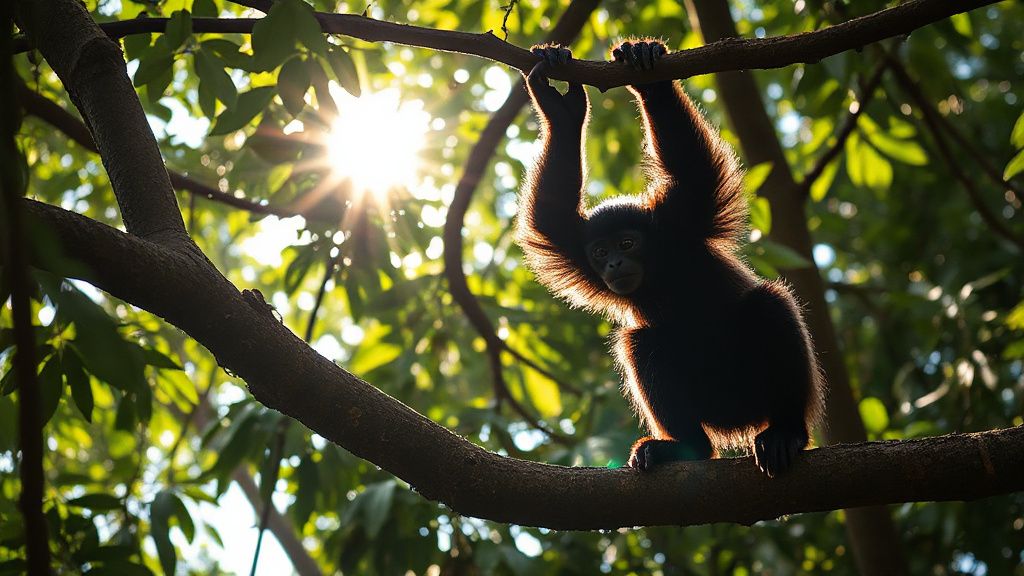
The spider monkey’s prehensile tail is a masterpiece of evolutionary adaptation. This specialized appendage functions as a fifth limb. Its incredible dexterity allows for secure gripping and precise manipulation. The tail’s underside features a hairless, ridged pad. This pad enhances friction, providing unparalleled purchase on branches.
Its musculature is highly developed. This enables powerful grasping and support. The tail’s length often exceeds the monkey’s body length. This provides an extended reach. It is crucial for navigating complex forest canopies. The spider monkey tail is indispensable for its lifestyle.
Locomotion: A Symphony of Movement
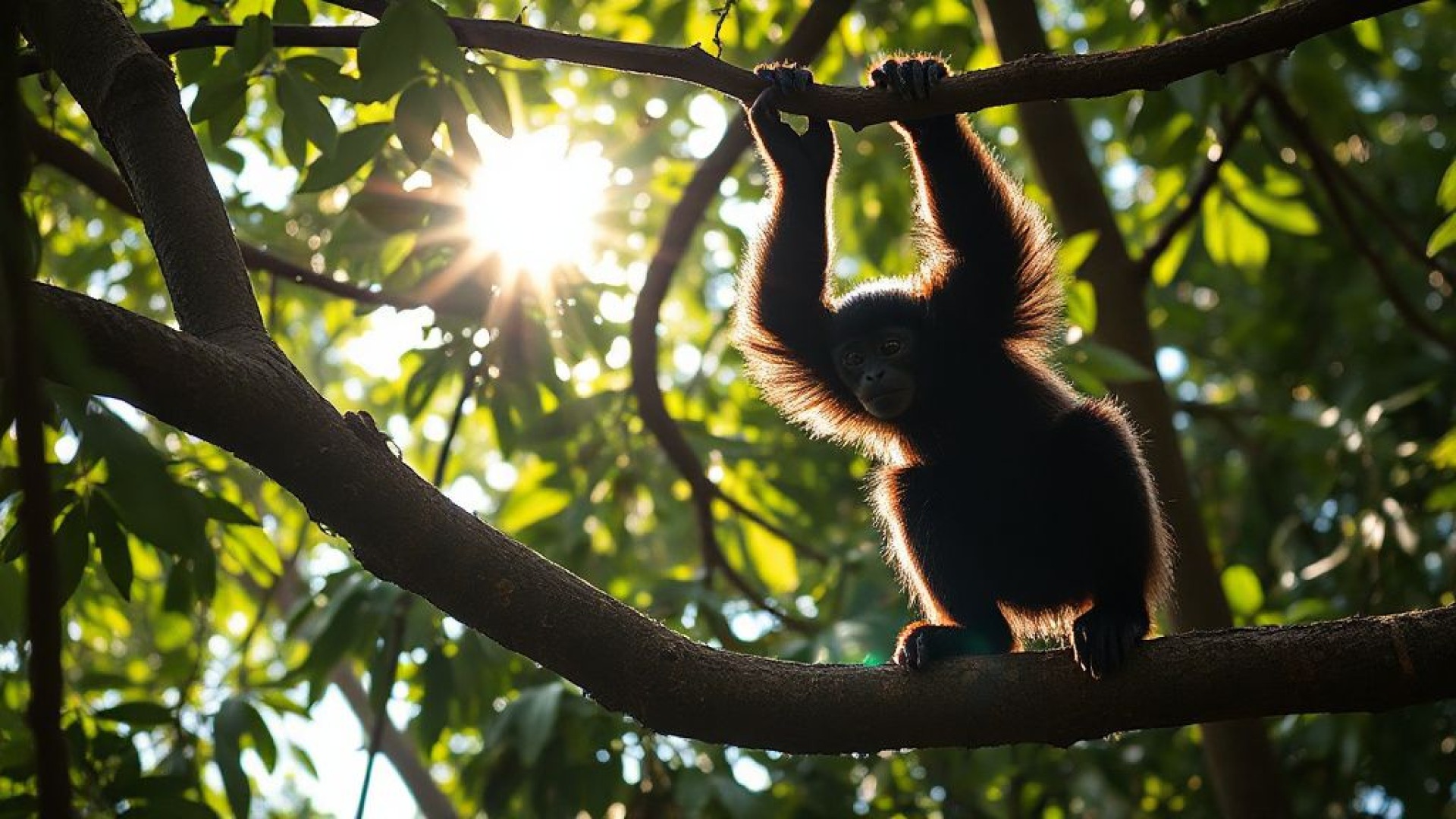
Arboreal locomotion reaches its zenith with the spider monkey. They move through the canopy with astonishing speed and agility. The prehensile tail acts as an anchor. It secures the monkey while limbs reach for distant holds. This allows for long leaps between trees. The tail also provides balance.
It counteracts body movements during rapid transit. This dynamic system minimizes energy expenditure. It maximizes safety in their elevated world. The spider monkey tail is key to this fluid motion. Their movements are a compelling proof to natural selection.
Foraging and Feeding: A Tail-Powered Advantage
Foraging efficiency is significantly boosted by the spider monkey tail. It allows them to access fruits and leaves in precarious positions. Monkeys can suspend themselves using only their tail. This frees both hands for gathering food. This technique grants access to resources others cannot reach.
It reduces the need to descend to the forest floor. This heightens their security from terrestrial predators. The spider monkey tail is central to their feeding strategy. This ensures a consistent food supply.
Social Dynamics and Tail Interactions
The spider monkey tail plays subtle roles in social interactions. While not used for aggressive displays, it aids in group cohesion. Young monkeys often cling to their mothers’ tails. It provides a secure attachment point. Grooming behaviors may involve the tail. It can also be used for signaling subtle comfort or insecurity. These interactions highlight the tail’s multifaceted utility. The spider monkey tail is more than just a tool.
Conservation Imperatives: Protecting the Arboreal Realm
Habitat loss poses the most significant threat to spider monkeys. Deforestation fragments their canopy homes. This restricts movement and access to food. The specialized nature of their arboreal lifestyle makes them vulnerable. Protecting large tracts of intact rainforest is vital. Conservation efforts focus on preserving these critical habitats. The future of the spider monkey tail depends on this. Their continued survival is paramount for ecosystem health.
Spider Monkey: Prehensile Tail for Arboreal Locomotion
Ecological Synthesis: Spider monkeys are highly arboreal primates whose survival hinges on their specialized prehensile tail for locomotion, foraging, and social interactions within the rainforest canopy.
- ✦ [IUCN / Smithsonian Tropical Research Institute]: Species exhibit significant tail length relative to body size, often exceeding 1.5 times their trunk length.
- ✦ [Zoological Telemetry / Field Observations]: Prehensile tail grip strength can support the full body weight of an adult monkey, enabling complex acrobatic maneuvers.
⚖️ Naturalist Conservation Verdict: The spider monkey's prehensile tail is a remarkable example of adaptation, enabling a unique and highly efficient mode of arboreal life. Its conservation is intrinsically linked to the health of tropical forest ecosystems.
👉 Experience the visual edition: Watch the Web Story ⚡. Access verified research updates directly on zeudytech.com. Cross-reference technical records via National Geographic Official Wildlife & Nature Archives.